I took a trip to Berlin last month with my brother. While the impetus for the trip was music, the city also offered a poignant glimpse into my family’s past.
A family connection
My grandfather Ernst Perl was born in Breslau (now Wrocław in Poland) and moved directly from there to London, where he met my grandmother. As I wandered around Berlin, a city that is very futuristic while still being filled with clear monuments to its past, I realized that it was also the setting for one of the most dramatic stories in my family tree. What’s more, I don’t have to traverse my tree very far to locate the protagonists, who were my grandfather’s aunt Elfriede Loew (née Perl) and her foster daughter Georgette.
Elfriede was born in Kattowitz (now Katowice in Poland) in 1881, the youngest of four children of Salomon Seelig Perl and his wife Ernestine (née Friedenstein). Her brother Hermann (b. 1873) was my great-grandfather.
Naturally, I find myself wondering how much DNA I might have shared with Elfriede. The range in the Shared cM Project for Great-great-aunt is 186 to 713cM. Reported values for this relationship in my tested family are 296, 312 and 381cM, reinforcing to me that Elfriede was not a distant relative.
A powerful piece of writing
Elfriede wrote The story of my escape to Switzerland in 1955 and you can read it in full at the Wiener Museum website. The events took place in 1942, and her description of life for Jewish people in Berlin at that time is concise and horrifying. Her husband had committed suicide on February 28th, 1942, and as the police and Gestapo closed in on Elfriede and her daughter, they planned an audacious escape.
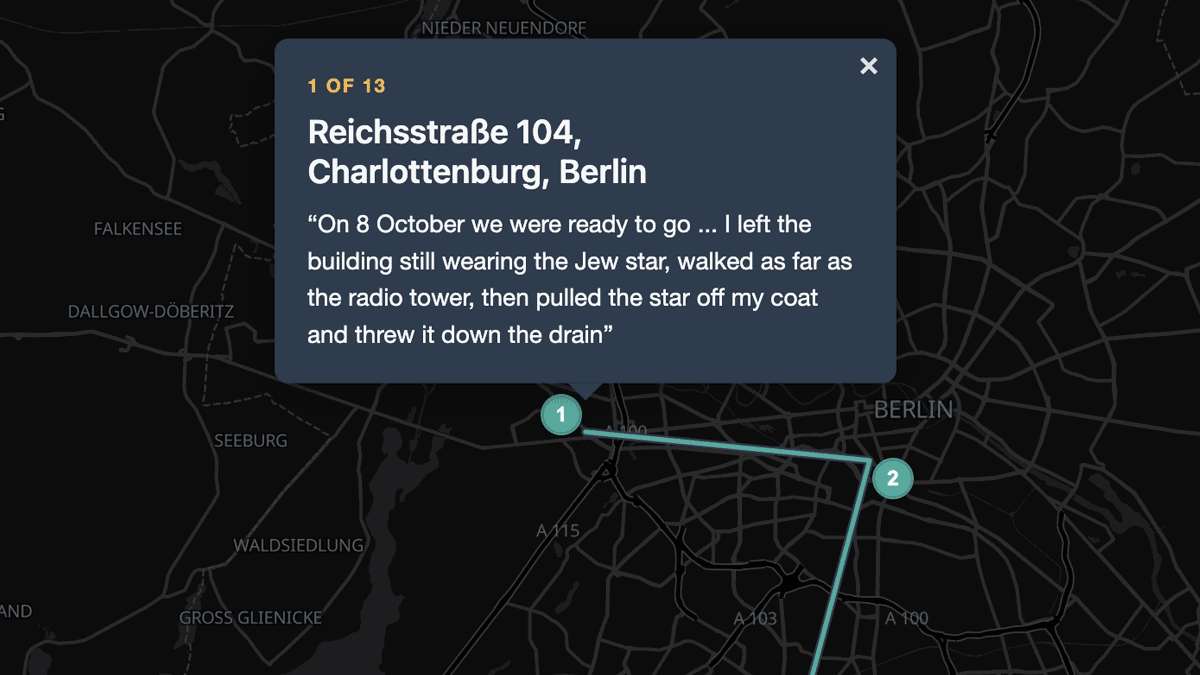
For context, on October 8th, 1942 when she left her apartment in Berlin, Elfriede was 61 years old. The full story is told in only 2,000 words and is well worth reading. Below is a summary of the key events. I’ve also created an interactive map to help understand the distances involved.
- Elfriede describes pulling the yellow star off her coat and throwing it down the drain on her way to the Anhalter Bahnhof train station.
- Travelling separately from her daughter at first, she took three trains and ended up at Hohen-Peissenberg. From there, she walked to the home of a Mrs Inge van Scherpenberg née Schacht, the sympathetic wife of diplomat Hilger van Scherpenberg.
- There, they were told that they would not have a guide, but would need to find their way to Switzerland on their own.
- They rested for two days and then set off on their journey via Innsbruck, Landeck and Nauders in Austria.
- After many dangerous moments, they finally found their way down through the mountains to Switzerland, where they spent several years in the camp at Adliswil.
- After the war, Elfriede moved to London, where her brother and his son Ernst, my grandfather, were also living. It seems Georgette went to the USA via Sweden.
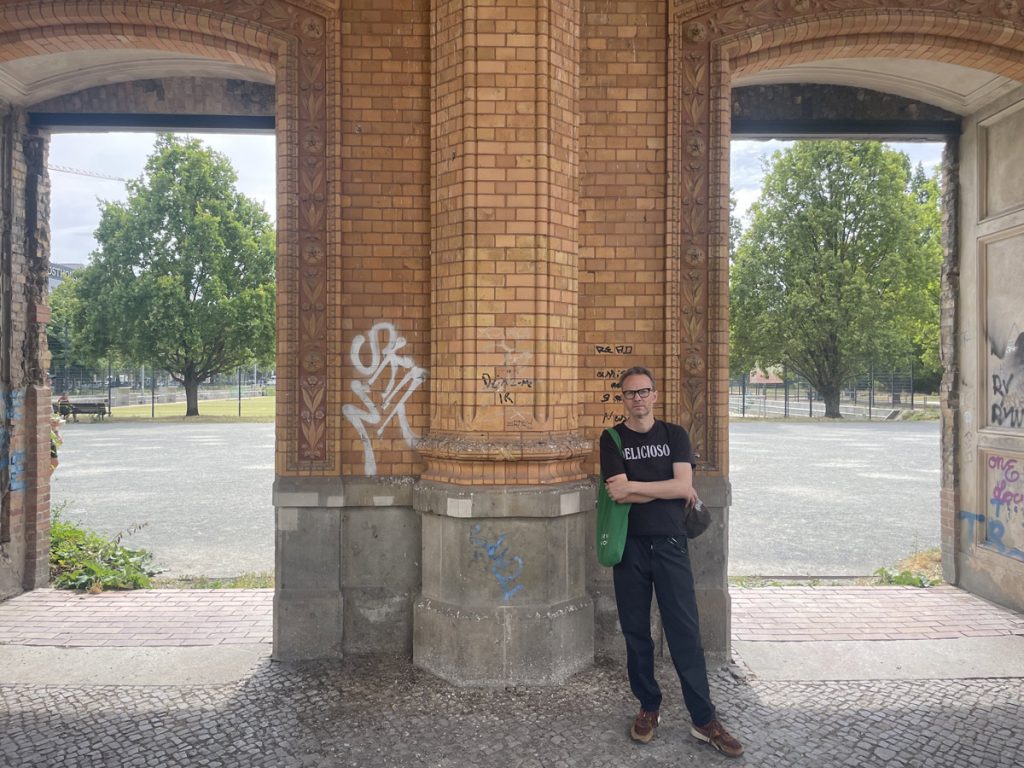
Prior to this trip, it had been several years since I had thought about this story. Reading it again, and then finding myself at the surviving remains of the Anhalter Bahnhof, was very intense. It was a hot day, and we set off in that direction without really knowing what we might find. To be able to walk through the entrance to the station was unexpected and affecting.
Anhalter Bahnhof
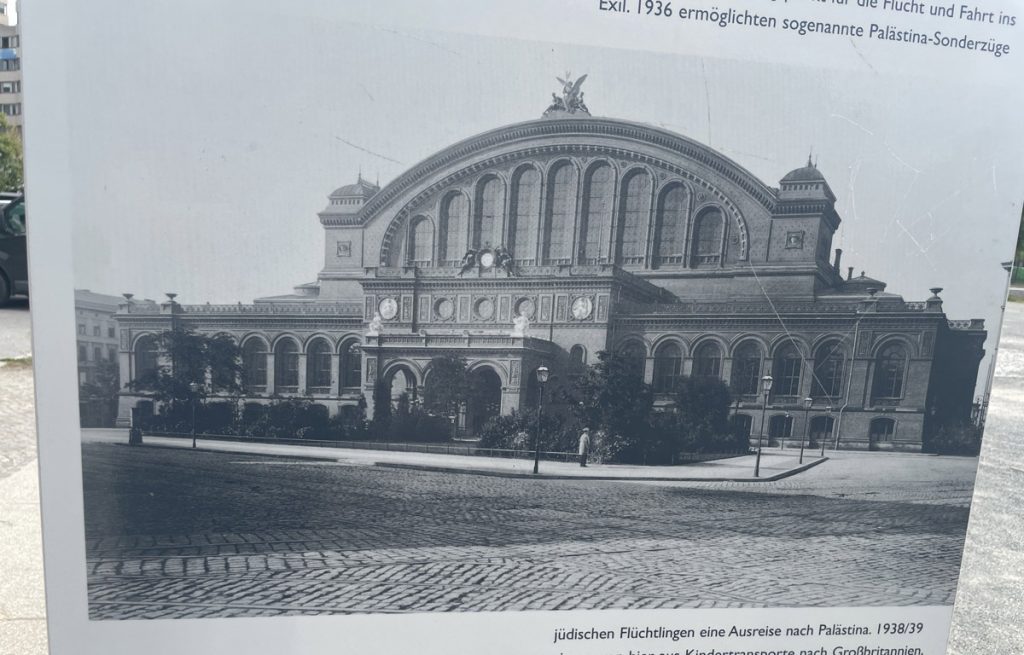
The building dates from 1880, and after being expanded, became an international hub from where you could travel to Prague, Vienna, Rome, Athens, and Constantinople. After Berlin was divided, the importance of the station diminished, and most of it was demolished in 1959. If you compare the two photographs below, you can see how small a proportion remains.
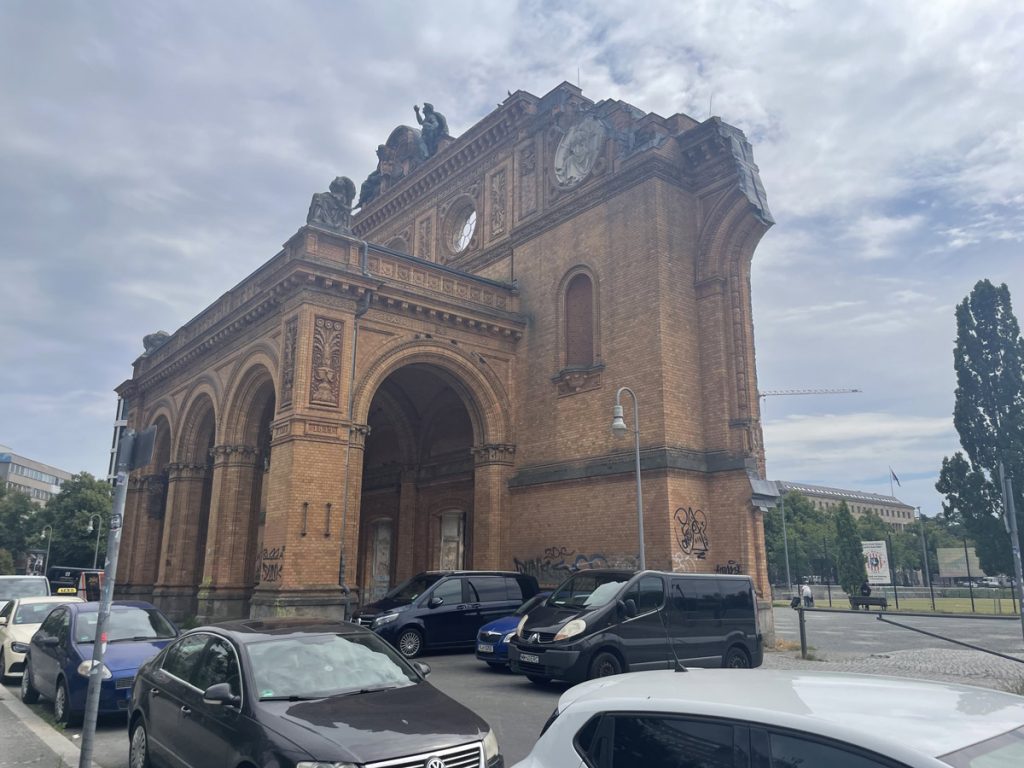
As you might imagine, it’s a strange, eerie place. As well as being where many headed to in order to escape, Anhalter Bahnhof was also the site for deportations to the Theresienstadt Ghetto.
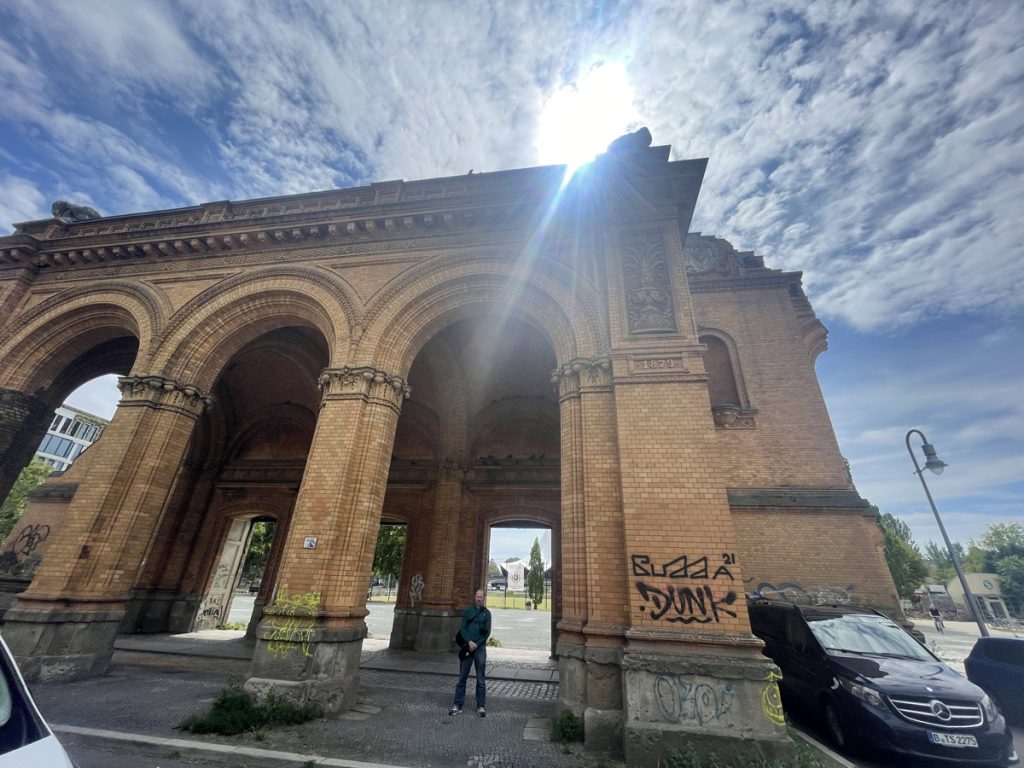
I’m glad I spent some time there, and all in all this was a reminder that family connections can show up when you’re not expecting them. And yes, I do plan to try and retrace the journey myself one day soon!
While researching this article, I also discovered a recently published book that shows what happened to some of the Germans who helped Elfriede and Georgette: The Traitors Circle by Jonathan Freedland.
Contact info: @dnapainter.bsky.social / jonny@dnapainter.com